The Trident G Model of General Intelligence in the Psi Zone (fluid intelligence g x cognitive resilience r). Effective training requires combining capacity training (e.g. relational n-back, attention control) with mindware (strategy) training.
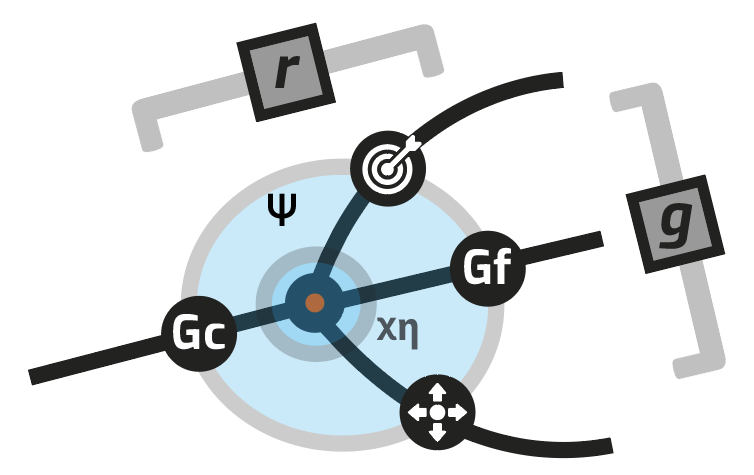
Shaft mindware consolidates and optimises your automated schemas.
Gf–Creative mindware provides heuristics for divergent ideation, format transformations, and insight negotiation.
Gf–Control mindware offers structured reasoning, causal simulations, and strategic planning templates.
Salience mindware tunes your error‐monitoring, interoceptive gating, and reset routines.
Meta‐Regulator mindware comprises your higher‐order self‐management strategies for calibration, practice design, and uncertainty control.
Here are the Trident G theory functions with associated mindware.
| Function | Sub-group | Methods |
|---|---|---|
| Shaft (Gc) | 1. Schema Consolidation | • Retrieval Practice (“Testing Effect”) • Sleep-Dependent Consolidation • Feedback-Guided Revision (mental error-correction cycles) • Self-Explanation Prompts (deepens encoding) |
| 2. Selective Gating | • Pareto Prioritisation • Bias-Checked Gating (mental debiasing checks) • Goal-Aligned Reweighting (dynamic mental ranking) | |
| 3. Sensorimotor & Visuospatial Anchoring | • Automated Skills • Visuospatial Anchoring (memory palace navigation) • Gesture-Driven Encoding (co-speech gesture) • Proprioceptive Anchoring • Posture-Check Metacognition (bodily micro-adjustment signals) | |
| Gf–Creative | 1. Divergent Generation | • Whale Hunting Protocol• Disjunction Scanning (OR Triggers) • Abductive Hypothesis Generation• SCAMPER Process • TRIZ Toolkit (inventive principles mentally applied) |
| 2. Format Manipulation | • Representation Selection • Representational Restructuring• Analogical Encoding • Concept Mapping • Role-Play Embodiment (mental/physical simulation of stakeholder roles) | |
| 3. Hybrid Insight & Negotiation | • Principled (Interest-Based) Negotiation • Embodied Analogy Engine • Devil’s Advocate Trigger (mental meta-gate) • Dialectical Bootstrapping (self-negotiation) | |
| Gf–Control | 1. Structured Reasoning | • Deductive Reasoning • Inductive/Probabilistic Reasoning • Abductive Hypothesis Testing • Premortem Analysis (mental failure-mode simulation) |
| 2. Causal Inference & Simulation | • Observation vs. Intervention Check • Graph-Surgery Heuristic • Counterfactual Simulation • Back-door Criterion (mental confounder blocking) • Difference-in-Differences • Instrumental Variable Protocol • Mediation Path Mapping | |
| 3. Strategic Planning | • Node-Branch Problem Solving • BATNA & Fallback Simulation • Dominant/Maximin Strategy Identification • Tit-for-Tat Reciprocity • SWOT Analysis• Scenario Planning• Intervention Embodiment • Strategic Impact Initiative • Influence & Persuasion Toolkit • Strategic OODA Loop | |
| Salience (Center) | 1. Error & Surprise Monitoring | • Critical Slope Monitoring (“mistake speedometer”) • OODA Loop • Meditation-Driven Salience |
| 2. Interoceptive Gating | • Interoceptive Confidence Calibration (ICC) • Impact × Effort Matrix • Affective Forecast Loop (anticipated regret/pride simulation) | |
| 3. Bodily-Cue Resets | • Attractor Topography Scanning (β-burst loop reset) • Kinesthetic Salience (motor-error β bursts) • Spatial Distancing / Cognitive Diffusion | |
| Meta-Regulators | 1. Threshold Calibration | • Somatic Meta-Labeling • CBT-style Cognitive Restructuring • Motor Confidence Calibration • Mindset Reframe Module • Self-Organized Criticality |
| 2. Practice & Spacing Design | • Distributed Practice • Interleaving Practice • Variability Designer (mental curation of novel variations) | |
| 3. Experimental Uncertainty Control | • Affective Labeling / Valence-Arousal Grid |
Mindware Definitions
Shaft (Crystallised intelligence)
1. Schema Consolidation
- Retrieval Practice (“Testing Effect”): Quizzing yourself on what you’ve learned so it sticks better.
- Sleep-Dependent Consolidation: Letting your brain organize and cement new knowledge overnight.
- Feedback-Guided Revision: Mentally reviewing mistakes and correcting them to sharpen understanding.
- Self-Explanation Prompts: Talking yourself through “why” something works to deepen your memory.
2. Selective Gating
- Pareto Prioritisation: Focusing on the 20 % of factors that deliver 80 % of the results.
- Bias-Checked Gating: Pausing to catch and correct any mental shortcuts or biases.
- Goal-Aligned Reweighting: Re-ranking your options in your head based on what matters most now.
3. Sensorimotor & Visuospatial Anchoring
- Automated Skills: Practicing until a task feels like second nature.
- Visuospatial Anchoring. Use a mental map to place and link information in imagined locations, engaging hippocampal spatial circuits for durable, relational memory and flexible generalisation.”
- Proprioceptive Anchoring: Using body positions (e.g. typing posture) as memory cues.
- Posture-Check Metacognition: Noticing tiny shifts in your stance to gauge your readiness or confidence.
- Gesture-Driven Encoding: Using hand motions when you talk to help lock in ideas.
Gf–Creative
1. Divergent Generation
- Whale Hunting Protocol: Spending a chunk of time chasing wildly ambitious “big bet” ideas.
- Disjunction Scanning (OR Triggers): Brainstorming “what if…” scenarios to expand your options.
- Abductive Hypothesis Generation: Making your best guess at the simplest explanation that fits.
- SCAMPER Process: Mentally asking “Substitute, Combine, Adapt…” to spark fresh ideas.
- TRIZ Toolkit: Running classic inventive principles through your mind to solve problems creatively.
2. Format Manipulation
- Representation Selection: Picking the best way (diagram, list, story) to frame a problem.
- Representational Restructuring: Reorganizing information in a new format to see hidden links.
- Analogical Encoding: Drawing parallels between two things to learn from one and apply to the other.
- Concept Mapping: Sketching a quick web of ideas to visualize their connections.
- Role-Play Embodiment: Imagining (or acting out) someone else’s role to gain new insight.
3. Hybrid Insight & Negotiation
- Principled (Interest-Based) Negotiation: Flipping between wild ideas and clear rules to find win-wins.
- Embodied Analogy Engine: Using simple movements to help your brain draw new connections.
- Devil’s Advocate Trigger: Deliberately arguing the opposite to test your own ideas.
- Dialectical Bootstrapping: Debating pros and cons with yourself to refine your choices.
Gf–Control
1. Structured Reasoning
- Deductive Reasoning: Applying general rules step-by-step to reach a conclusion.
- Inductive/Probabilistic Reasoning: Weighing evidence to figure out what’s most likely true.
- Abductive Hypothesis Testing: Forming a hypothesis then checking it mentally against the facts.
- Premortem Analysis: Imagining your plan has already failed and listing reasons why in advance.
2. Causal Inference & Simulation
- Observation vs. Intervention Check: Asking “What if I just watch instead of doing this?” to test cause and effect.
- Graph-Surgery Heuristic: Mentally “cutting” links to see what really drives an outcome.
- Counterfactual Simulation: Replaying an event in your head with one detail changed to see what happens.
- Back-door Criterion: Blocking distracting factors mentally to isolate true causes.
- Difference-in-Differences: Comparing before-and-after changes against a baseline in your mind.
- Instrumental Variable Protocol: Imagining a fair test for hidden causes without bias.
- Mediation Path Mapping: Breaking a cause-effect chain into direct versus indirect steps mentally.
3. Strategic Planning
- Node-Branch Problem Solving: Breaking a big goal into sub-questions, then pruning bad paths.
- BATNA & Fallback Simulation: Thinking through your best backup plan if things go sideways.
- Dominant/Maximin Strategy Identification: Picking the option that wins best or protects against worst outcomes.
- Tit-for-Tat Reciprocity: Mentally tracking give-and-take to guide fair cooperation.
- SWOT Analysis: Listing your Strengths, Weaknesses, Opportunities, and Threats.
- Scenario Planning: Imagining multiple future stories to choose your best path.
- Intervention Embodiment: Physically acting out a plan to see how it feels in practice.
- Strategic Impact Initiative: Planning and executing one big win to boost your long-term standing.
- Influence & Persuasion Toolkit: Using simple mental rules (like scarcity or authority) to sway others.
- Strategic OODA Loop: Continuously Observe, Orient, Decide, Act at the strategic level.
Salience (Center)
1. Error & Surprise Monitoring
- Critical Slope Monitoring: Watching how quickly mistakes pile up to avoid getting overwhelmed.
- OODA Loop (β-burst resets on surprise): Quickly spotting surprises and restarting your thinking.
- Meditation-Driven Salience: Taking brief mindful pauses to stay alert for errors.
2. Interoceptive Gating
- Interoceptive Confidence Calibration (ICC): Checking how your gut feels to decide if you’re sure.
- Impact × Effort Matrix: Mentally plotting tasks by payoff vs. work to pick the best ones.
- Affective Forecast Loop: Imagining how you’ll feel afterwards to guide your choices.
3. Bodily-Cue Resets
- Attractor Topography Scanning: Noticing tiny body signals when stuck to jolt yourself free.
- Kinesthetic Salience: Using a stumble or other movement hiccup as a cue to rethink your approach.
- Spatial Distancing / Cognitive Diffusion: Mentally stepping back from a problem to reset your focus.
Meta-Regulators
1. Threshold Calibration
- Somatic Meta-Labeling: Noticing and naming your bodily reactions to guide decisions.
- CBT-style Cognitive Restructuring: Spotting and reframing negative thoughts on the fly.
- Motor Confidence Calibration: Feeling your physical ease or tension to gauge confidence.
- Mindset Reframe Module: Reminding yourself that challenges are chances to grow.
- Self-Organized Criticality (SOC): Adjusting your own challenge level to stay in a “flow zone.”
2. Practice & Spacing Design
- Distributed Practice: Spacing out practice sessions over time to remember more.
- Interleaving Practice: Mixing different types of problems in one session to boost learning.
- Variability Designer: Mentally adding twists to practice tasks so you don’t get stuck in a rut.
3. Experimental Uncertainty Control
- Affective Labeling / Valence-Arousal Grid: Noting your emotions on a simple chart to see how feelings affect your choices.